Scoliosis: the basics
by Dr. Annika
You may have heard people talk about having a curvature of the spine.
If you look at a person side-on, there should be curves, which are desirable and normal. They add springiness of the spine. If those curves are lost, there is more impact travelling through the spine, and is often associated with and/or caused by wear and tear.
But if you look at a person from behind, the top of their pelvic bones should be level, and the spine should look straight. If a person has a scoliosis, often the tops of the pelvic bones are not level, and there is a noticeable deviation from the midline to the left and/or right.
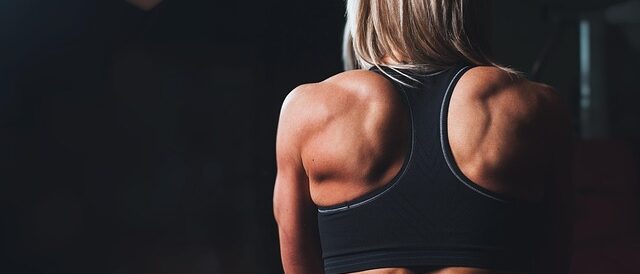
If you look at the feature image, you will notice that the vertical strap is just off center – this lady most likely has a small scoliosis.
For the worst cases, it is necessary to put metal rods into the spine to stop the curve progressing and to avoid the organs being “squished”. If the lungs and the heart don’t have room for expansion, you can imagine that they can’t work all that well. Sometimes, the abdominal organs can be affected too, but because there is space in the front of the belly, it’s not usually quite as much of a problem.
Most of us have a subtle curve. In 31 years of chiropractic practice, I am yet to meet a perfectly straight spine. I think this is because we live in inherently asymmetrical bodies; most of us have the heart on the left, and 2/3 of the liver is on the right etc.
The more subtle curves are often to a large extent functional, meaning that with a bit of treatment, things do get a lot closer to ideal. My observation is that when someone aggravates their spine, their usual curves are much more pronounced than when that person’s spine is in good balance.
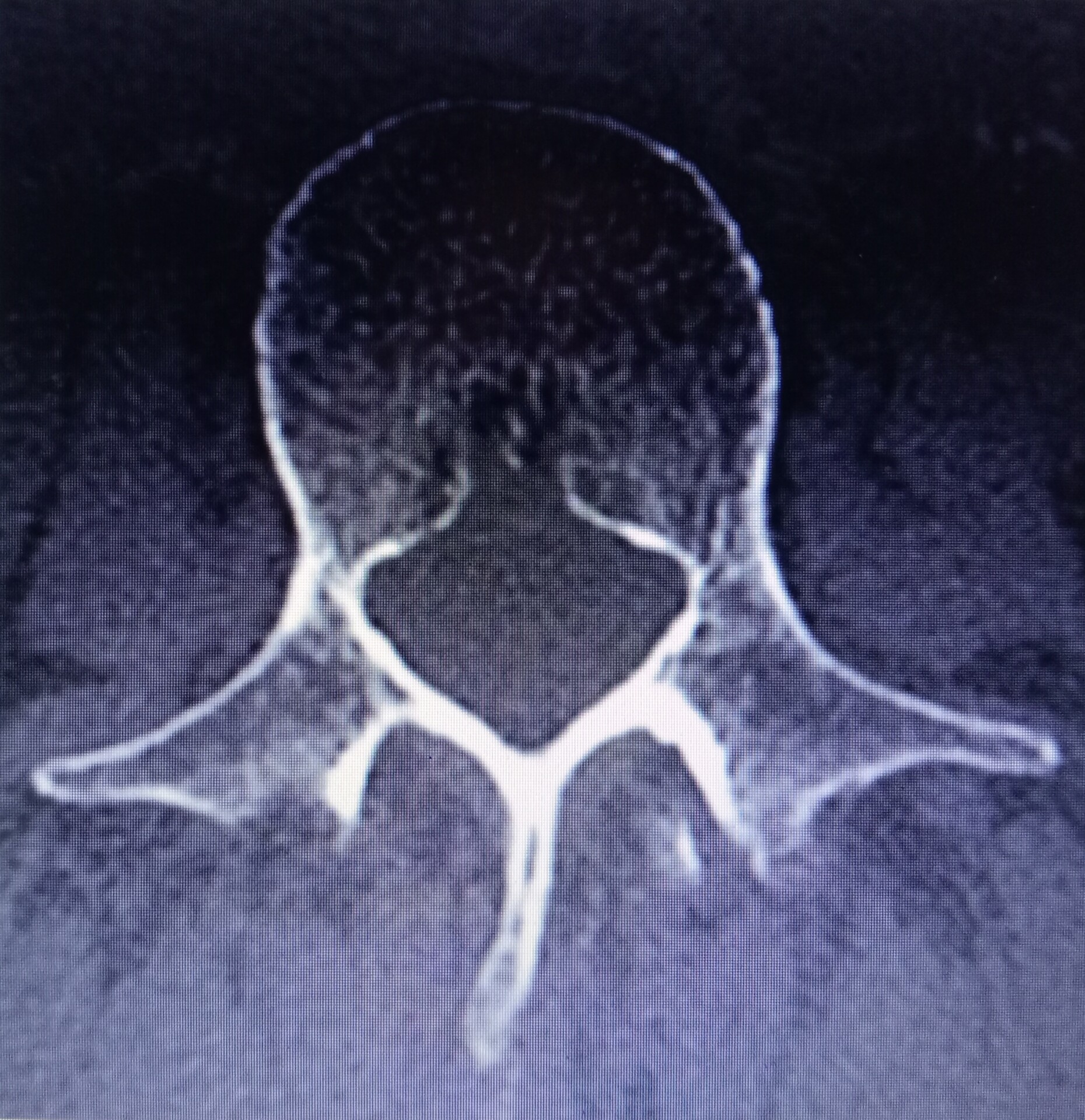
But there can also be a structural component, meaning that the bones become asymmetrical. If you look at the image, you will notice that the spinous process (the “tail” pointing downward) points to the left of the picture; it ideally should be straight.
Where this becomes really important is in children. They often have small distortions, acquired through the birthing process or the numerous bumps to the head and falls that go with growing up, or from walking on flat surfaces all the time. As they grow, they can become large distortions, and if they aren’t picked up and treated early, the bones will start adapting and you may have a problem for life.
Growing bones that have force put through them slow down the growth, whereas bones that have little force going through them keep going. I have seen people with actual leg length differences just because they got in the habit of always standing on the same leg! Within a vertebra, if there is more pressure on one side of the bone than on the other, one side will gain height less than the other and then you end up with a structural scoliosis.
Read more about feet https://spectrumchiropractic.com.au/just-how-important-are-your-feet/
Image by Scott Webb from Pixabay